
Kevin Rogers
Jun 28, 2026
Sunday June 28, 2026 |
Weekly Updates from the Ridge |
Trivia Question❓What is the largest county in Maine by land area and is known for its potato farming and winter sports? Answer at the bottom of the newsletter |

Quote Of The Day |
"Every day may not be good, but there is something good in every day." |
Joke Of The Day |
Why did the potato go to Aroostook County? Because it wanted to be a real "tater"! |
Maine Forest Service has introduced a $9 million WoodsWISE Resilience Program to help landowners strengthen their forests against threats like storms, wildfires, pests, and disease. The program provides financial incentives and guidance to help landowners build forest resilience, cover 60-90% of planning costs and implementation of practices, and offer up to $20,000 in funding. Eligible landowners with 10 or more forested acres can participate, including individuals, families, tribal governments, local governments, non-profits, and private owners. Participants must work with a Maine Forest Service-approved Resilience Forester, and financial incentives are considered taxable income. The program covers three categories of practices: early stand tending, regeneration support, and forest health practices. Landowners interested in enrolling can schedule a free consultation with their District Forester. The program aims to raise awareness and action around forest resilience, promote long-term relationships between foresters and landowners, and support the health of forest ecosystems. Funding is available through 2029, or until funds are exhausted, thanks to support from the US Forest Service. |
| Read More... |
Interesting Facts |
|
Q/A Questions |
Q: What is the largest county in Maine? A: Aroostook County. Q: What is the county seat of Aroostook County? A: Houlton. Q: What is the primary industry in Aroostook County? A: Agriculture, particularly potato farming. |
How to Make Root Beer |
Recreation economy news |
North America’s Next Wild Birding Year May Be Coming |
Uncover Rainy Day Comfort, Resilient Forests, and Cribbage: Diving Into a Diverse Sunday Agenda! |

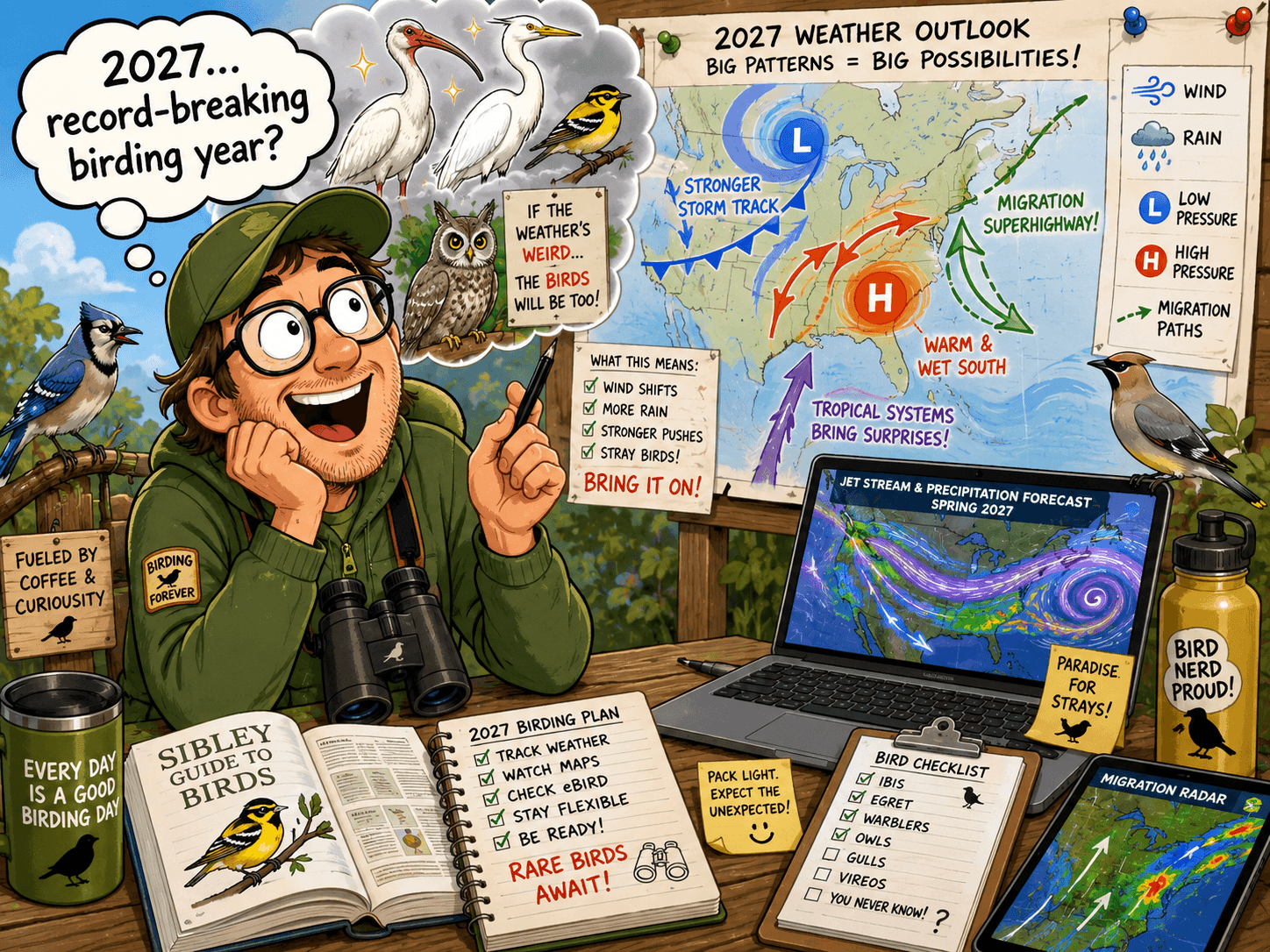
2027: The Year Birders May Be Watching Everything. |
Could 2027 Be the Year Someone Breaks the ABA North America Big Year Record?
Birders may want to keep one eye on the sky and the other on the weather maps.
A North American “Big Year” is one of birding’s greatest challenges: how many bird species can one person document in the ABA Area between January 1 and December 31?
The modern ABA Area now includes the United States, Canada, Hawaii, St. Pierre et Miquelon, and surrounding offshore waters.
The current record is a mountain.
Current Big Year records are almost hard to comprehend.
In the North American ABA Area, John Weigel set the modern benchmark with 840 species in 2019.
On the world stage, Arjan Dwarshuis set the global Big Year record in 2016 with 6,852 species observed across 40 countries.
Those numbers show just how serious, strategic, and physically demanding a true Big Year can become.
But 2027 is already shaping up to be one of those years birders talk about before it even begins.
Why?
Because the weather pattern is getting interesting.
NOAA is reporting El Niño conditions are already present and expected to strengthen into the winter of 2026–27. Strong El Niño years can influence storm tracks, ocean temperatures, migration timing, winter bird movement, and the chances of rare vagrants showing up far from where they are usually expected.
That does not guarantee a record-breaking year.
But it does create the kind of conditions that make serious birders start watching coastlines, islands, migration corridors, northern forests, southern hotspots, and rare bird alerts a little more closely.
A year like 2027 could bring unusual southern birds north, western birds east, pelagic surprises offshore, storm-driven rarities, and unexpected migration windows across the continent.
For places like Northern Maine and the Houlton area, that matters too.
We may not be the center of the ABA Big Year chase, but we sit in a remarkable part of the birding map — northern forest, farm country, waterways, migration routes, raptors, owls, grouse, woodpeckers, warblers, and the occasional sighting that makes someone stop and say, “Wait… what was that?”
If 2027 becomes a wild birding year, Southern Aroostook should be ready.
Ready with bird reports.
Because sometimes a Big Year is not just about one person chasing a record.
Sometimes it is about an entire region learning how to look up. |
 |
Tip of The Day |
Don't forget to check out the beautiful star-filled sky in Aroostook County - it's the perfect place for stargazing! |
Rainy Day Comfort: Simple Ways to Enjoy a Quiet Day Indoors |
 |
Not every weekend needs to be packed with travel, errands, projects, or outdoor adventure.
Sometimes the rain comes down, the sky stays gray, and the best thing you can do is stay inside, slow down, and let the day become what it wants to be. In a place like Northern Maine, where so much of life is tied to seasons, weather, outdoor work, trails, gardens, roads, and recreation, a rainy day can feel like a forced pause.
But that pause can be a gift.
Rainy indoor days are perfect for the kind of simple things we often say we do not have time for anymore. A pot of coffee. A slow breakfast. A good book. A card game. A puzzle. A movie you have been meaning to watch. A phone call to someone you have not talked to in a while. A little baking. A little cleaning. A little remembering.
One of the best ways to pass a rainy day indoors is with an old-fashioned game. Cribbage, rummy, Scrabble, checkers, chess, dominoes, or a good puzzle can turn a quiet afternoon into something memorable. There is something special about sitting across from another person with a board, cards, or game pieces between you. The conversation comes easier. The laughs sneak in. The hours pass without anyone needing to rush.
Cribbage, especially, has a way of making a rainy day feel right. The sound of pegs moving across the board, the counting of fifteens and runs, the small victories during pegging, and the friendly competition all bring back a slower kind of living. For many families, games like that were not just entertainment. They were how lessons got passed down. Patience, memory, strategy, focus, and a little humility all came across the table one hand at a time.
Rainy days are also good cooking days. A pot of soup, baked beans, biscuits, bread, chili, stew, or something sweet in the oven can warm up the whole house. Even something simple like grilled cheese and tomato soup feels better when the rain is tapping at the windows. It does not have to be fancy. Sometimes comfort food is less about the recipe and more about the feeling it brings with it.
For those who enjoy quiet hobbies, an indoor day can be perfect for working with your hands. Quilting, knitting, woodworking, painting, writing, organizing old photos, tying fishing flies, fixing gear, making crafts, or starting a small project can make the day feel useful without making it stressful.
Rain gives people permission to move slower. It can also be a good day to reconnect with local history and family memories. Pull out the photo albums. Write down an old story before it gets forgotten. Ask a parent, grandparent, aunt, uncle, or old friend about the way things used to be. Record a memory on your phone.
Write a letter. Make a list of family recipes. Sometimes a rainy day is the perfect time to preserve the things that matter.
For those who prefer rest, there is nothing wrong with making the day quiet on purpose. Put on a favorite movie. Listen to an old album. Watch the birds from the window.
Take a nap.
Make tea.
Light a candle.
Sit without feeling guilty about it. We live in a world that pushes people to stay busy all the time, but rest is not wasted time. Sometimes it is exactly what a person needs.
Rainy days can also be good planning days. Plan a summer drive. Make a list of places you want to visit when the weather clears. Look up local events. Start a weekend itinerary. Check the community calendar. Make a list of restaurants, farm stands, trails, shops, museums, and small businesses you want to support. A rainy day indoors can become the beginning of the next sunny day’s adventure.
Families with children can use rainy days to build small traditions. Make popcorn and have a movie afternoon.
Build a blanket fort. Let the kids help bake cookies. Teach them a card game. Start a puzzle on the kitchen table. Have everyone draw a picture, tell a story, or make their own little indoor scavenger hunt. These things may seem simple in the moment, but years later, they are often the memories people carry.
For people who live alone, rainy days can feel a little heavier. That is when it helps to create a small ritual. Make a favorite meal. Call someone. Write a note. Play music. Read something uplifting. Work on a hobby. Watch something that makes you laugh. Even a quiet day can feel less lonely when it has rhythm and intention.
The truth is, rainy days remind us that not every good day has to happen outside. Some of the best ones happen at the kitchen table, near the coffee pot, beside a window, with cards in hand, soup on the stove, or an old movie playing in the background.
So the next time the forecast calls for rain all weekend, maybe do not fight it.
Stay in.
Slow down.
Make something warm.
Play a game.
Call someone you miss.
Let the rain do what rain does.
And let the day become a little softer because of it. |
Park and Recreation Story's from around the country. |
The article explores the history and rules of the card game cribbage, a traditional pastime that has been popular among men for centuries. Cribbage is believed to have originated in the early 17th century and has since become a favorite among players of all ages. The game involves a unique scoring system, which includes pegging points on a wooden board. Players must strategically play their cards to maximize their points, with the goal of reaching 121 points to win the game. The article provides a detailed explanation of how to play cribbage, including how to set up the board, deal the cards, and keep score. It also offers tips and strategies for improving one's cribbage skills, such as learning to anticipate opponents' moves and using the discard to one's advantage. Overall, cribbage is described as a fun and challenging game that requires both skill and luck, making it a timeless favorite among men who enjoy friendly competition and strategic gameplay. |
| Read More... |
 |
Secret Little Hack |
Explore the hidden gem of Conroy Lake for stunning views and serene nature walks. |
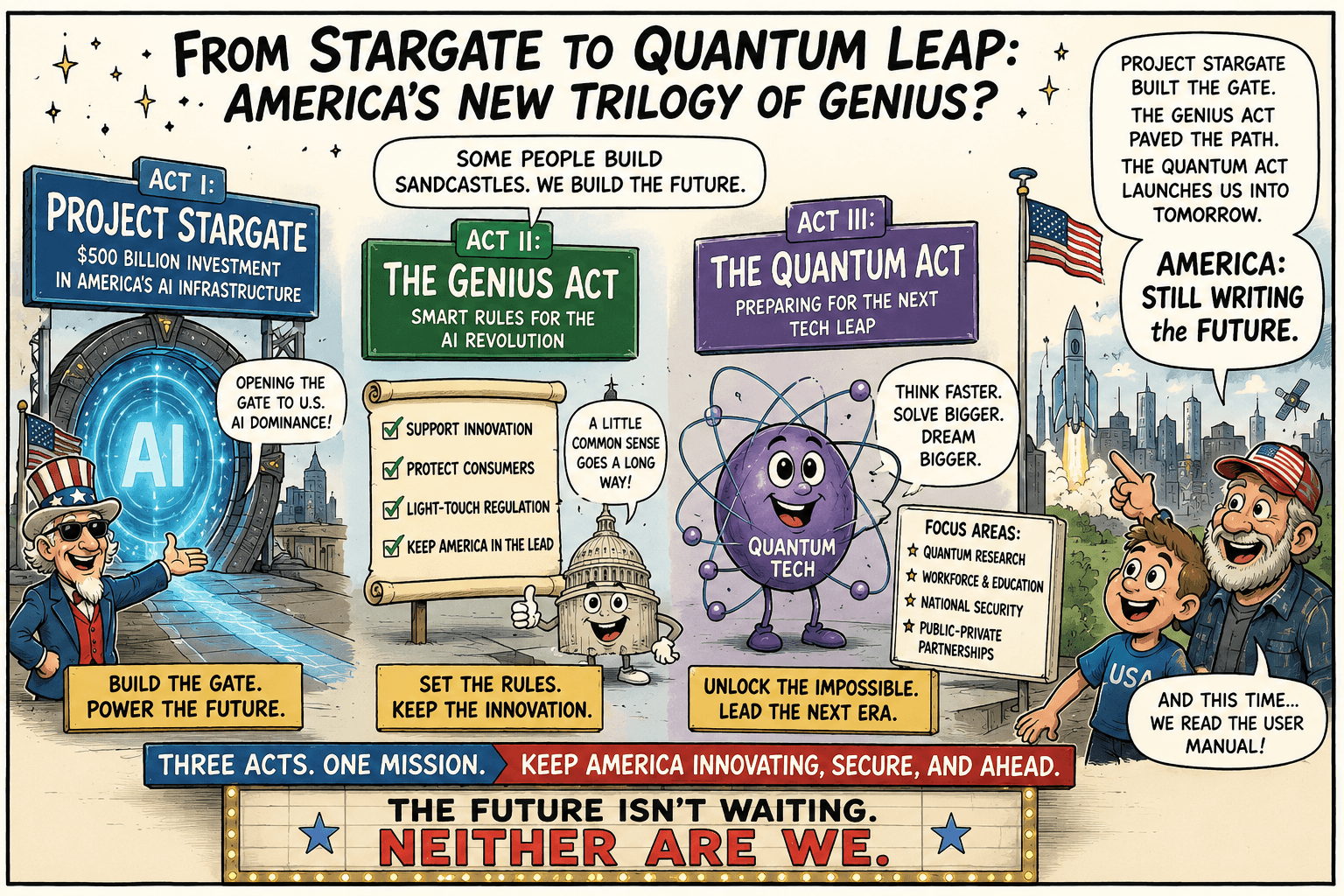
Quantum, Stablecoins, and Stargate: Why the Next Economy Is Being Built Around Infrastructure |
 |
Most people hear words like quantum computing, stablecoins, artificial intelligence, and data centers and think they are separate stories.
They are not.
They are pieces of the same larger shift.
America is entering a new technology buildout where the most important assets may no longer be just factories, roads, railroads, and ports. The next economy is being built around computing power, digital payment rails, energy capacity, secure networks, advanced chips, data centers, cyber protection, and a workforce that can support it all.
That is why three recent developments matter together: the federal push into quantum technology, the GENIUS Act for stablecoins, and the Stargate artificial intelligence infrastructure project.
On the surface, they sound very different.
Quantum technology is about advanced computing, sensing, networking, national security, and scientific discovery.
The GENIUS Act is about creating rules for payment stablecoins, a form of digital currency designed to stay tied to the value of the U.S. dollar.
Stargate is about building massive artificial intelligence infrastructure in the United States.
But together, they point in one direction: the United States is trying to build and control the next generation of the digital economy.
The quantum executive order focuses on keeping America ahead in quantum information science and technology.
That includes quantum computers, quantum sensors, quantum networks, domestic supply chains, research facilities, national security protections, and workforce training. In simple terms, the federal government is saying that quantum technology is no longer just a science project. It is becoming an economic and strategic priority.
That matters because quantum technology could eventually change the way industries handle complex calculations, cybersecurity, logistics, medicine, materials, defense systems, navigation, energy research, and advanced manufacturing.
Then there is the GENIUS Act.
Stablecoins may sound like crypto jargon, but the basic idea is simple. A stablecoin is a digital token designed to hold steady value, usually by being backed by dollars or other safe assets. The GENIUS Act creates a federal framework for these payment stablecoins and requires issuers to hold proper reserves.
Why does that matter?
Because if stablecoins become widely used, they could become part of the payment plumbing of the digital economy. Money could move faster, across longer distances, at lower cost, and outside normal banking hours. Businesses could settle invoices faster. Online platforms could pay workers or vendors more efficiently. International commerce could become easier. Rural businesses could someday use new payment rails that are faster than traditional systems.
But there are risks too. Stablecoins need strong reserves, reliable technology, fraud protection, cybersecurity, and clear consumer safeguards. If the plumbing fails, real people can get hurt. That is why regulation matters.
The third piece is Stargate Project.
Stargate is a large artificial intelligence infrastructure project involving major technology and investment partners. Its goal is to build major AI computing capacity in the United States. That means data centers, chips, energy systems, cooling systems, fiber networks, construction, engineering, and long-term operations.
This is where the story becomes very practical.
Artificial intelligence is not magic floating in the cloud. It runs on physical infrastructure. It needs land, power, water or cooling systems, fiber connections, security, electricians, contractors, technicians, operators, engineers, and maintenance crews. The cloud is not really a cloud. It is buildings, wires, machines, people, and energy.
So when we talk about AI, quantum computing, and digital payments, we are really talking about infrastructure.
That creates a major question for rural America:
Will rural communities only watch this new economy happen somewhere else, or will they prepare to participate?
For Aroostook County and rural Maine, the opportunity is not to pretend we are suddenly going to become Silicon Valley. That is the wrong frame.
The better question is this:
What pieces of this new economy can rural regions realistically support? The answer may be more than people think.
Rural regions can prepare workers for technical trades connected to data centers, energy systems, broadband, fiber installation, cybersecurity, equipment maintenance, electrical work, construction, logistics, and advanced manufacturing support.
Local schools can introduce students to AI literacy, coding, robotics, electronics, cybersecurity, digital finance, and quantum concepts at a basic level.
Adult education programs and community colleges can help workers retrain for jobs that do not always require a four-year degree.
Economic development groups can pursue grants tied to workforce development, rural technology readiness, broadband expansion, energy resilience, STEM education, and small-business modernization.
Small businesses can learn how to use AI tools, accept modern payments, protect customer data, and compete in a more digital marketplace.
Nonprofits and community organizations can help make sure older adults, low-income families, small towns, and rural workers are not left behind.
Key Federal and State-Supported Technology Grants in MaineMaine businesses, nonprofits, municipalities, and community organizations have several important funding pathways available as technology, broadband, cybersecurity, and digital workforce development become bigger priorities.
SBIR/STTR Assistance
The federal government provides billions of dollars each year through the Small Business Innovation Research and Small Business Technology Transfer programs. These programs help small businesses develop innovative technologies, conduct research, and move promising ideas toward commercialization.
In Maine, the Maine Technology Institute helps businesses pursue these federal opportunities through Federal Funding Application Support. This assistance can help companies identify the right agency, strengthen proposals, review applications, and improve their chances of competing successfully.
MTI Phase 0 Grants
The Maine Technology Institute also offers Phase 0 Technical Assistance Program grants of up to $5,000. These funds help Maine small businesses pay for expert support, such as grant writers, technical consultants, or proposal development specialists.
For early-stage companies, this can be especially valuable because SBIR and STTR applications are highly competitive. A Phase 0 grant can help turn a good idea into a stronger federal funding proposal.
Digital Equity Act Programs
The Maine Connectivity Authority administers programs designed to expand digital access, improve digital skills, and close the technology gap across the state. These efforts are supported through federal Digital Equity Act funding and related Digital Opportunity Network Grants. Eligible projects may include digital skills training, technology access programs, device refurbishment, community education, and support for underserved residents who need better access to modern digital tools.
Cybersecurity Grants
The State and Local Cybersecurity Grant Program is managed in Maine through the Maine Emergency Management Agency. This program distributes federal funding to help state, local, tribal, and territorial governments strengthen cybersecurity defenses.
For communities and public agencies, this funding can support cyber planning, risk assessments, system upgrades, staff training, and improved protection against online threats.
Infrastructure and Broadband Funding
The Maine Connectivity Authority also manages major broadband infrastructure funding, including federal BEAD-related investments. These funds are intended to expand high-speed internet access, improve broadband infrastructure, and reach underserved and unserved communities.
For rural Maine, broadband funding is one of the most important pieces of the future economy. Reliable high-speed internet supports remote work, education, telehealth, small-business growth, tourism marketing, online commerce, emergency services, and workforce development.
Together, these programs show that Maine has a real opportunity to prepare for the next economy by investing in innovation, broadband, cybersecurity, digital skills, and technology-based business development.
That may be the most important point.
The next economy will not only reward the people who invent the technology. It will reward the regions that prepare for it early. Aroostook County already understands infrastructure. We understand roads, trucking, equipment, farms, utilities, garages, trades, land, winter conditions, and long distances. Those are not weaknesses. In the next economy, practical problem-solving still matters.
A data center needs electricians.
An AI company needs energy.
A digital payment system needs cybersecurity.
A quantum supply chain needs components, facilities, technicians, and trained workers.
A rural business needs help understanding how to use these tools without getting buried by them.
This is where grant opportunities may begin to open.
When federal policy points toward quantum technology, AI infrastructure, stablecoin regulation, supply chains, and workforce training, funding usually follows. It may come through workforce boards, universities, community colleges, state programs, economic development agencies, broadband programs, energy grants, cybersecurity initiatives, or public-private partnerships.
Southern Aroostook should be paying attention now.
Not because every local business needs to become a tech company.
But because every local business will be affected by technology.
Restaurants will use AI marketing.
Garages will use digital scheduling and payments.
Farmers will use sensors, mapping, and automation.
Contractors will use estimating software and digital lead systems.
Tourism businesses will use online discovery tools.
Seniors will need help avoiding digital scams.
Students will need future-ready skills.
Workers will need new training pathways.
Communities will need stronger broadband, better digital literacy, and more technical confidence.
The big national story is about quantum, stablecoins, and artificial intelligence.
The local story is about readiness.
If America is building the next generation of digital infrastructure, rural Maine should not wait until everything is already decided. We should be asking where we fit, what skills our people need, what grants align with this shift, and how our local businesses can prepare.
The future will still need people who can build, fix, wire, secure, teach, organize, transport, manage, and lead.
That is good news for rural communities.
But only if we start early.
Quantum technology, the GENIUS Act, and Stargate may sound like faraway national headlines. But underneath those headlines is a simple message:
The next economy is being built now.
The communities that prepare will have a chance to benefit.
The communities that ignore it may spend the next decade wondering why the opportunity passed them by. |
Fifteen-Two and a Lifetime of Memories |
Cribbage, Coffee, and the Sound of Rain |
 |
"The Classic Game of Cribbage: A Perfect Mix of Luck, Skill, and Strategy" |
Cribbage is a classic card game that combines luck, skill, strategy, math, memory, and a little bit of nerve.
Most people know it as a two-player game, although it can also be played with three or four players. The goal is simple: be the first player to reach the winning score, usually 121 points, or sometimes 61 in a shorter game. It is played with a standard 52-card deck, and players score points by making combinations such as fifteens, pairs, runs, flushes, and thirty-ones during play.
But for those of us who grew up around the game, cribbage is more than rules and points.
It is rainy weekends. Kitchen tables. Old wooden boards. Pegs clicking into place. Coffee cups. Trash talk. Family. Friends. Fathers. Work buddies. Golf buddies. Christmas tournaments. Long games on cold days. And, if you were lucky, someone older taking the time to teach you how to really play.
I think I was about seven years old when my dad first taught me cribbage. Before I ever played, I watched him play family members, guys from work, golf friends, and just about every older man I knew. Back then, it seemed like all the men played cribbage. It was one of those games you learned by sitting nearby, watching hands get counted, and listening to someone say, “You missed two.” My dad believed there was a right way to learn.
He said before you could really play cribbage, you had to master the fifteens. You had to see every way a hand could make fifteen — with two cards, three cards, four cards, or even all five. Once you could spot the fifteens, then you could learn the runs, pairs, knobs, flushes, and the rest of the counting.
But my dad did not teach me the easy version. He taught me cutthroat from the start.
That meant if I missed points, he took them. If I failed to count a fifteen, he pegged it " known as a mugging". If I missed a run, he took it. If I forgot a pair, he did not give me a second chance. He reached for the peg and reminded me that cribbage rewards the player who pays attention.
After about a year, I did not miss very many.
As I got older, the game became more than counting. By the time I was twelve, I was learning crib play and pegging. By the time I reached high school, not many kids my age could come within 15 points of beating me, if I did not skunk them first.
Later, I realized just how useful that skill could be. When I got to college, I found out that only a handful of people actually knew how to play cribbage — and a few more only thought they did.
We ended up with a little notebook of about twenty players who would run matches against each other. It was nothing fancy, but it was serious enough. A dollar on the corners, minimum dime a point, and every Friday you settled up.
Most weeks, I would collect thirty to fifty bucks. Back then, that was not bad walking-around money for a college kid.
But for me, it was never really about the money. It was about staying sharp. Every game was practice. Every hand was a lesson. Every match was one more chance to tune up my counting, pegging, discarding, and trap-setting before the Christmas tournament came around.
On the surface, each player is dealt six cards and chooses two to discard into the crib. The crib belongs to the dealer and is counted later as an extra hand. After the discard, players take turns laying down cards, trying to score points during play by making fifteens, pairs, runs, and thirty-one. After the pegging round is over, each player counts their hand, and then the dealer counts the crib.
The scoring is tracked on a cribbage board, usually made of wood or plastic, with holes and pegs that move along the track. That board is part of the charm. There is something satisfying about moving those pegs, especially when you hit a big hand, steal a few points in pegging, or slide close enough to put pressure on your opponent.
But the real beauty of cribbage is that it is not just one game.
It is three games happening at the same time.
First, there is the hand you keep for points.
Second, there is the hand you keep for pegging.
Third, there is the crib — either loading your own crib or protecting yourself from feeding your opponent too much.
A beginner looks at a hand and asks, “How many points do I have?”
A better player asks, “What should I keep?”
A strong player asks, “Whose crib is it, where are we on the board, what can I score during pegging, what am I giving away, and what can I force my opponent to do?”
That is when cribbage becomes more than a card game. It becomes a quiet little battle of math, patience, instinct, and timing.
Luck matters, of course. The draw can help you or bury you. But a good player can take a weak hand and still find points during pegging. A master player might have almost nothing in the count and still pick up six, eight, or even more points during play. Sometimes the goal is not to have the biggest hand. Sometimes the goal is to survive the board, stay in position, block your opponent, or set up the next deal.
Pegging is where many casual players lose the game without realizing it.
Keeping cards for points is important, but keeping cards for play can be even more important, especially around the six-to-ten point range. That is where the traps begin. If you have enough cards that can add up to eleven, you can start setting up fifteens. If you understand what your opponent might be holding, you can avoid giving up pairs, runs, or easy thirty-ones. A simple card can be bait. A pair can be dangerous. A run can turn against you fast.
That is what makes cribbage such a great game. It is easy to learn, but it can take a lifetime to master.
It teaches you to count.
It teaches you to watch.
It teaches you to think ahead.
It teaches you that missed points matter.
It teaches you that sometimes you play the hand you were dealt, not the hand you wanted.
And maybe most of all, it teaches you that some of the best memories are made across a small board, with a deck of cards between two people who both know the game.
So on rainy weekends, when the house is quiet and there is nobody around to play a few hands, I find myself missing more than the game. I miss the people.
I miss my dad teaching me the hard way.
I miss the old players who knew every trap.
I miss the kitchen table games, the Christmas tournaments, the paper route stops, and the feeling of being a kid learning something that would stay with me for life.
Cribbage may be a card game built on luck, skill, and strategy.
But for me, it is also memory on a board.
And on a quiet rainy day, I would give just about anything to hear someone shuffle the deck, slide it across the table, and say: “Cut?” |

Nonprofit Spotlight of the Week: Houlton Humane Society
This week, we’re encouraging our community to support the Houlton Humane Society.
They do the hard, quiet work of caring for local animals, helping pets find safe homes, and supporting the bond between people and their animals across Southern Aroostook.
Whether you can adopt, foster, donate food or supplies, volunteer, or simply share their posts, every little bit helps.
A strong community takes care of its people — and its animals. Let’s show some love this week for the pets waiting for their next chapter. |
|
 |
The article discusses various drinks that can naturally lower heart rate and provide potential health benefits. Some of these drinks include hibiscus tea, green tea, and chamomile tea, which have been shown to have calming effects on the body. Hibiscus tea, in particular, is rich in antioxidants, which can help reduce inflammation and lower blood pressure. Green tea also has antioxidants that can improve heart health and reduce the risk of heart disease. Chamomile tea has been known for its calming properties and can help lower stress and anxiety levels. Other drinks such as beetroot juice, pomegranate juice, and watermelon juice are also recommended for their potential heart-healthy benefits. These drinks are natural and easily accessible options for individuals looking to improve their heart health and lower their heart rate. Overall, incorporating these beverages into a balanced diet can help promote overall well-being and support heart health. |
| Read More... |
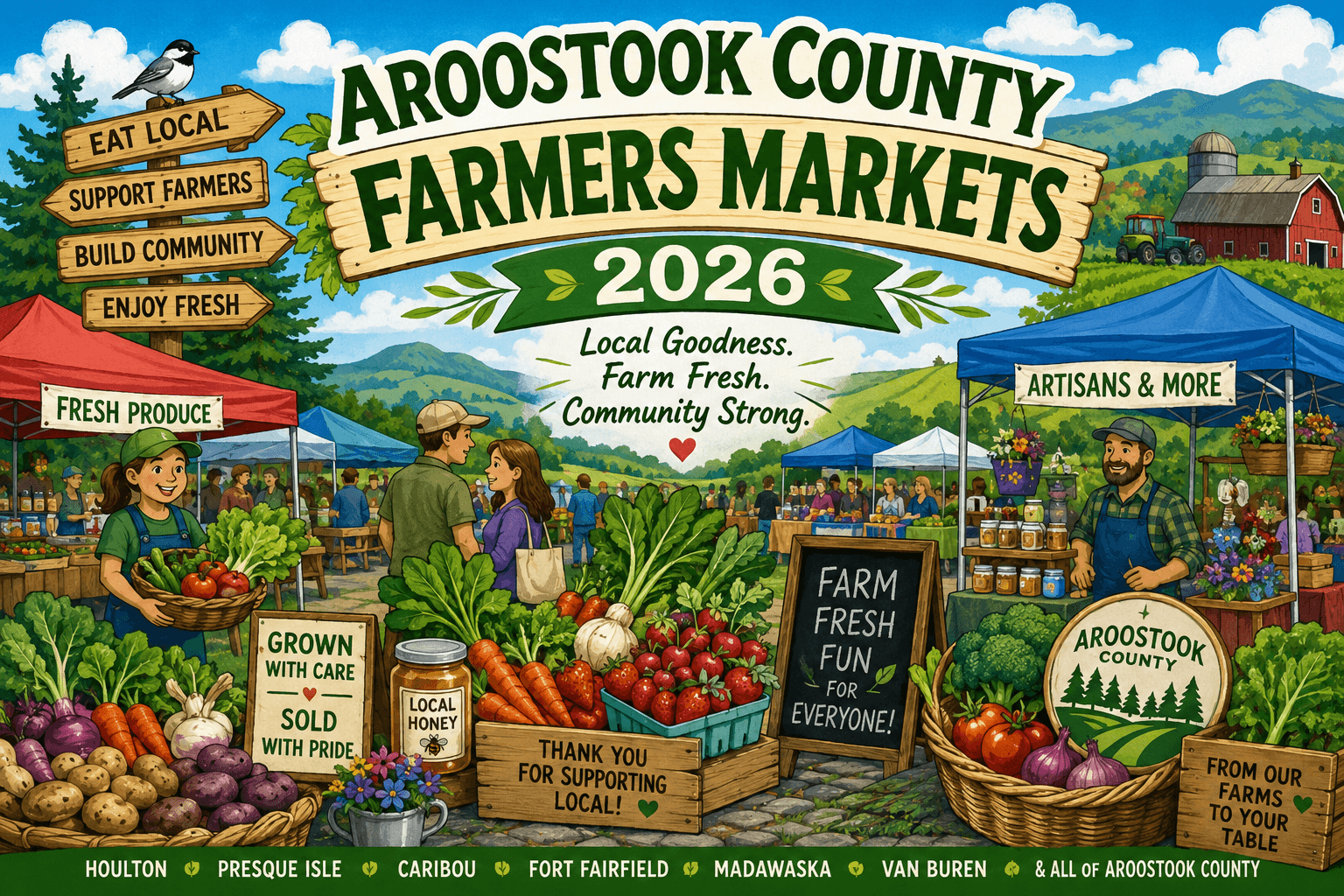
Summer mornings in Aroostook County offer a unique charm that captures all your senses.
The air is filled with the warm scent of fresh baked goods, while locally grown vegetables and sweet maple syrup from neighborhood sugarhouses line vibrant farmers market tables.
Handcrafted items made by talented local artisans add even more personality to the scene.
Every visit brings a chance to meet the growers, bakers, and crafters who shape the community’s character.
Whether you’re a lifelong resident or simply exploring Northern Maine for a weekend, stopping by a farmers market is one of the most authentic ways to experience everything the region has to offer. Read More... |
💡 Answer to Trivia Question: Aroostook County |