Wake Up Winning: The Secret Habits of People Who Rise Before Their Alarm
Wake up before your alarm? Your body may be trying to tell you something surprising.

Kevin Rogers
Jul 16, 2026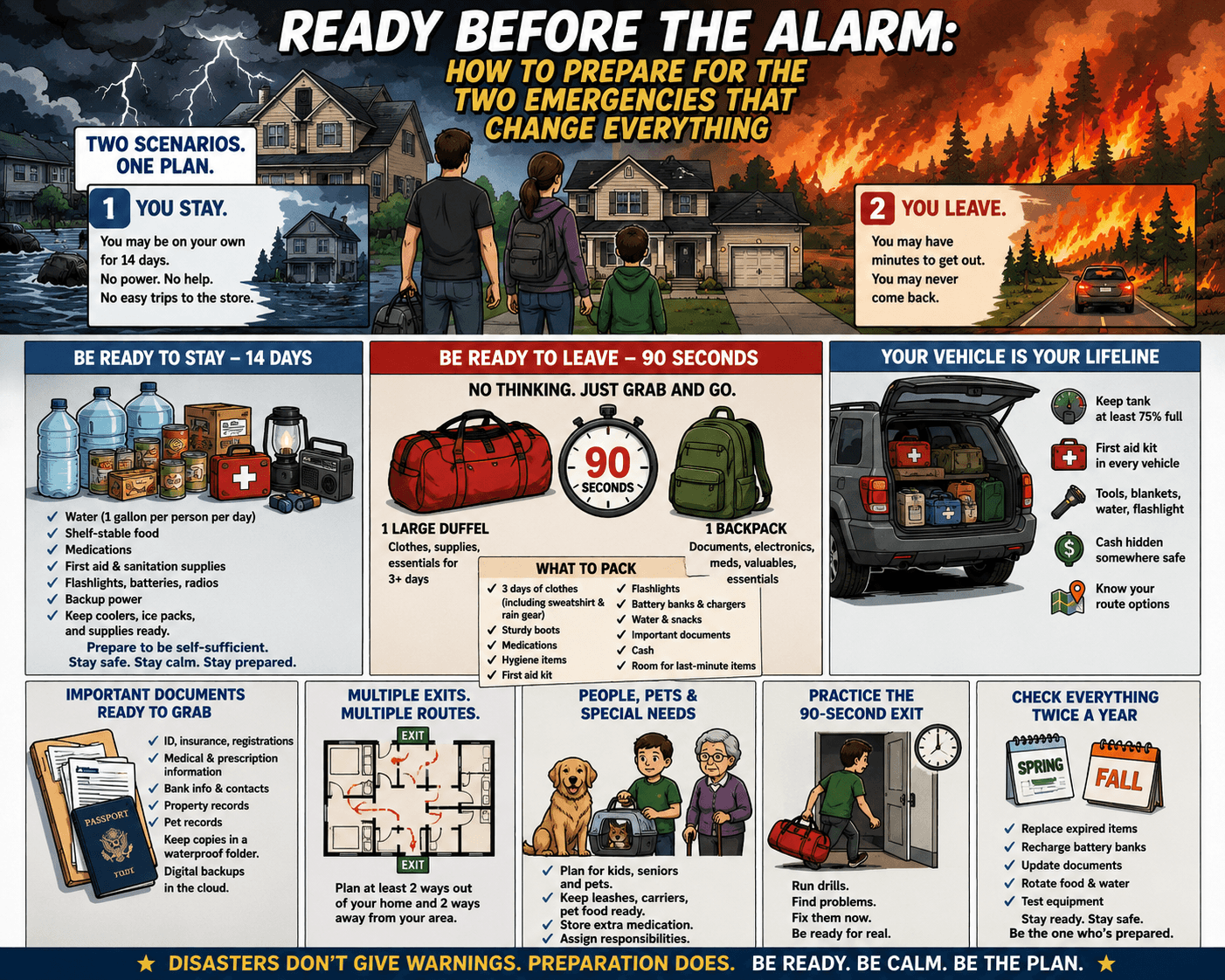
Most emergencies fall into one of two categories: you stay, or you leave.
If you stay, plan to be self-sufficient for at least 14 days — with water, food, medication, lighting, and backup power stored and accessible to everyone in the household.
If you leave, you may have 90 seconds. That means grab-and-go bags must already be packed and positioned near an exit — not buried in a closet.
Each person should have one duffel and one backpack containing essentials: medication, chargers, cash, documents, first aid, and snacks. Attach a checklist to the outside so there's no guessing under pressure.
Keep your fuel tank above three-quarters full, know your backup exit routes, and assign roles to every household member — including responsibility for pets and medical equipment.
Run a timed drill. Review everything twice a year. The goal isn't fearlessness — it's a plan you can follow when fear is loudest.